Most brands don’t struggle with what to say. They struggle with how to say it.
So the message gets watered down, over-polished, or rewritten five different ways depending on who’s working on it. The result is content that feels inconsistent at best, forgettable at worst.
That’s where brand voice and tone come in.
What Is Brand Voice?
Brand voice is your personality. It’s the consistent way your brand communicates, no matter where it shows up.
Your voice doesn’t change depending on the platform, the campaign, or who on your team is writing that day. It’s the throughline that makes your brand recognizable.
If your brand walked into a room, your voice is how it would speak. Confident or cautious? Direct or long-winded? Buttoned-up or a little unfiltered? Please, just anything but painfully generic.
What Is Brand Tone?
Brand tone is how your voice adapts to different situations. It’s flexible, while your voice stays consistent.
Tone shifts based on context, platform, and audience. A brand might sound bold and punchy in a product launch, then calm and reassuring in a service issue. The personality stays the same, but the delivery adjusts.
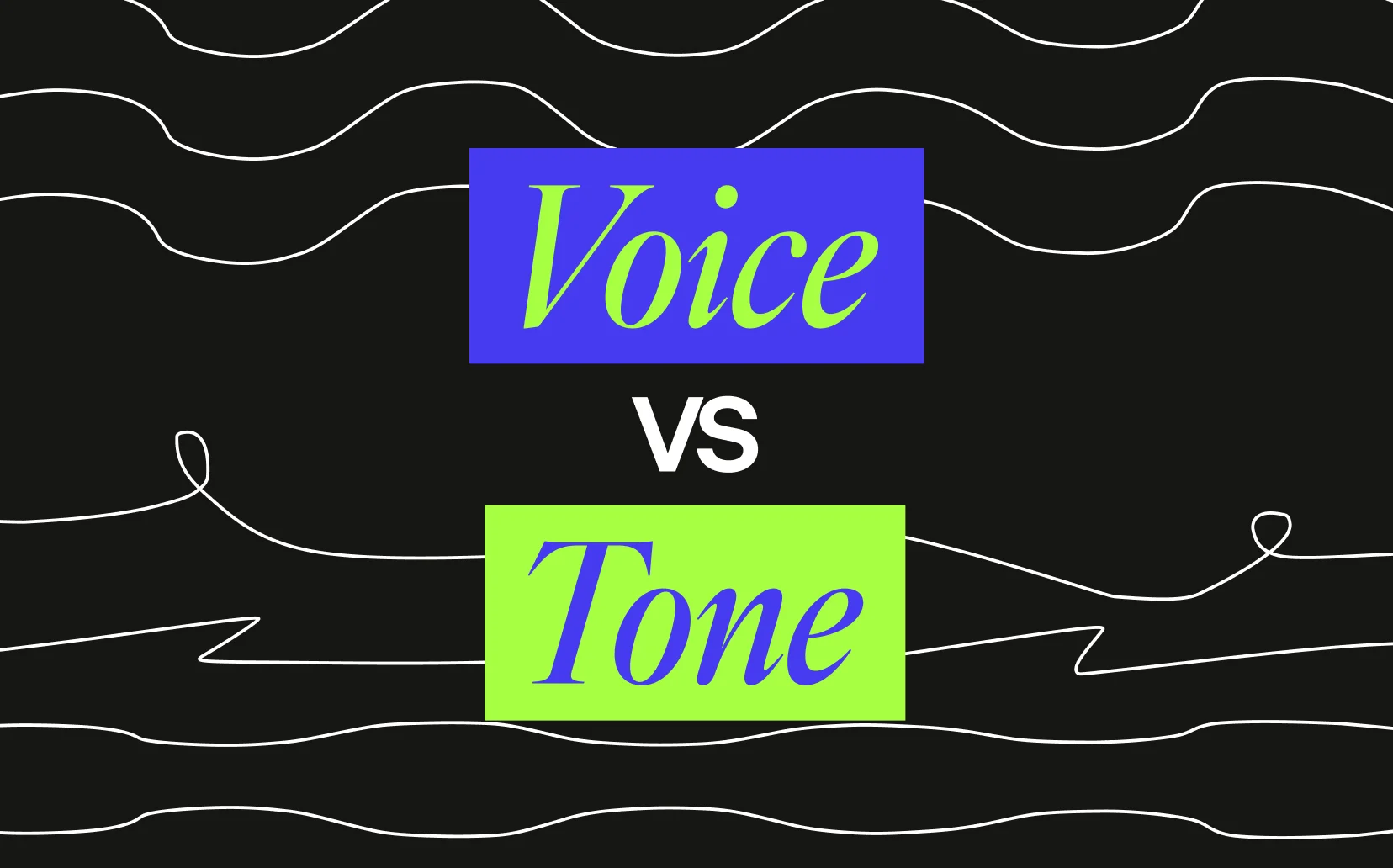
Brand Voice vs Tone: What’s the Difference?
Your brand voice is how you consistently sound, no matter where you show up. It’s your baseline personality.
Your brand tone is how that voice adjusts depending on what you are saying and where it’s showing up.
So yes, voice is consistent. Tone shifts. But the more important part is how that plays out in real content.
Because your voice needs to carry across everything:
- Website copy
- Sales decks
- LinkedIn posts
- Emails
- Ads
- Case studies
And your tone is what makes each of those feel right for the moment.
Look at us as an example. At PDG, our voice is direct, a little unfiltered, and not overly polished. That always stays the same. But the tone shifts depending on where it shows up. This blog leans more conversational. A homepage would be tighter and more punchy. A client deliverable would be more focused and structured.
How to Define Your Brand Voice
Defining your brand voice is not about picking a few adjectives and hoping your team interprets them the same way. That is how you end up with five versions of your brand floating around.
A strong brand voice is clear, usable, and consistent across everything you create.
Here’s how to actually define it.
Define Who You Are And Who You Are Not
Most brands stop at who they are, but that’s only half the job.
If you don’t define who you are not, your voice will drift. Fast.
To get specific, pressure-test your boundaries:
- Are we direct or more layered in how we explain things?
- Are we confident or more reserved?
- Are we conversational or more formal?
- Where do we draw the line between witty and trying too hard?
- What would feel off-brand if we said it?
Audit How You Already Sound
Your brand voice probably already exists. It’s just buried. Dig it up by looking at how your team naturally communicates.
Start pulling from real moments:
- How do we explain what we do on a call?
- What do our Slack/Microsoft Teams messages or internal docs sound like?
- Where does our writing feel the most natural right now?
- Where does it feel forced or overly polished?
Test Your Voice Across Real Content
Your brand voice needs to hold up across different types of content without falling apart or sounding inconsistent.
Put it into real scenarios:
- Does this voice work on a homepage and in a case study?
- Can we use it in both short-form and long-form content?
- Does it still sound like us in a more serious or sensitive context?
- Would this voice feel natural in an email, ad, or sales deck?
Once you’ve worked through all three, you should have something that feels less like a vague idea and more like a usable system.
4 Signs Your Brand Voice Is Not Working
If your content feels like it’s doing more work than it should, your brand voice might be the issue.
1. Your Brand Sounds Inconsistent Across Channels
Your social media feels casual. Your website sounds overly corporate. Your sales deck is somewhere in between – just trying its best.
It’s giving less of a “multi-channel strategy” and more of a “multiple personalities.”
2. Your Content Is Not Driving Engagement Or Conversions
You’re putting content out there. It looks fine. It reads fine. It just… doesn’t do much.
Low clicks, low engagement, low conversions. That usually means the message is not landing.
Common signs:
- People aren’t engaging with your posts or content
- Website traffic isn’t turning into leads or action
- Your messaging explains, but doesn’t convince
It’s not always a volume issue. Sometimes it’s a voice issue. If it doesn’t resonate, it doesn’t convert.
3. Your Messaging Feels Generic Or Easy To Ignore
If your content could be swapped with a competitor’s and no one would notice, your brand voice is blending in.
This is where brands start sounding safe. Too safe.
You might catch yourself:
- Using the same buzzwords as everyone else in your space
- Avoiding strong opinions to appeal to a wider audience
- Playing it safe instead of saying something clear
It’s the marketing version of being beige. Technically fine, but no one’s picking it.
4. Your Audience And Team Are Both Confused
If your audience doesn’t get what you do, and your team can’t explain it the same way twice, your voice is not doing its job.
This usually shows up on both sides.
Externally:
- Customers ask what you actually do
- Your value prop doesn’t land clearly
- Your tone doesn’t match your audience
Internally:
- Teams use different language to describe the business
- Freelancers and partners interpret your brand differently
- You’re constantly tweaking messaging to “make it clearer”
Ready to Build a Brand Voice That Actually Sounds Like You?
Defining your brand voice is one thing. Applying it consistently across your business is where most teams struggle.
That’s where PDG comes in.
We work with teams to define a brand voice that reflects how they actually think, communicate, and deliver value. Not something overly polished or templated, but something clear, intentional, and usable across every touchpoint.
From there, we help you apply it. Across your website, content, campaigns, and sales materials, so everything feels aligned and consistent without losing nuance.
That often looks like:
- Refining how you talk about your value so it’s clear and differentiated
- Removing generic language that dilutes your message
- Establishing tone guidelines that flex across channels without losing consistency
- Aligning your internal teams so marketing, sales, and leadership sound like the same brand
It also connects back to your broader messaging. When your voice is grounded in something like a Message House, it becomes easier to scale content without losing clarity or consistency.
Ready to build a brand voice and tone that authentically represents your business? Let’s talk.